LINDA IN YAHOO! TRAVEL: The best affordable family vacation ideas
Camping, road trips, all-inclusive resorts — even cruises. Here's how to keep costs down on your next trip.
By: Mia Taylor, Contributing Writer

From home exchanges to shoulder-season travel, small planning decisions can have a big impact on a family getaway.
(Everste via Getty Images)
As the cost of living continues to skyrocket, I've had to get increasingly creative to make vacations affordable for my son and me. That includes flying out of alternative airports to score cheaper airfare, as well as engaging in the emerging travel trend known as "fluxury," splitting time in a destination between accommodations of different price points.
A growing number of Americans, meanwhile, are scrapping vacations altogether. But I firmly believe that travel is an important way to support your overall health and well-being (and various studies have proven as much). And for families, travel offers a way to spend quality time together, creating memories that last a lifetime. From swimming with whale sharks in Mexico's Sea of Cortez to learning how to make ramen together in Japan, my son and I have been lucky enough to do exactly that.
If you're looking for ways to make a family vacation happen this year but need to rein in costs, read on. I've rounded up a variety of ideas from my own travel file and from other experts. Here's how to reduce expenses while still enjoying a family getaway.
RV Vacations

Renting an RV is a great way to get outdoors — without the expense of hotel fees.
(Kieran Stone via Getty Images)
The cost of airfare has been climbing steadily amid jet fuel shortages triggered by the Iran war. In response, many Americans are turning to road trips in the United States. That's led to a resurgence in RV vacations, according to a recent survey conducted by the RV Industry Association. There's no denying that the cost of fueling up these large vehicles can be steep, but there are so many other savings associated with this style of travel that it still comes out as a budget win.
Not only does an RV vacation eliminate nightly hotel expenses, but you can also prepare meals in a recreational vehicle, cutting down significantly on the cost of eating out for breakfast, lunch and dinner. Many RVs include a fridge, along with a stove, oven and microwave.
As someone who grew up going on RV vacations during summer breaks, exploring most of the American Southwest this way with my family, I can attest that this style of travel is unforgettable. RVs are an especially comfortable way to move from one place to another, allowing kids to spread out, play games and relax while the driving takes place. And at day's end, you can simply pull into a campground and enjoy the fun of roasting marshmallows over a campfire.
All-inclusive resorts

Bundling all your expenses into one rate can help trim costs.
(Isbjorn via Getty Images)
All-inclusive resorts aren't for everyone. But for families seeking to cut costs, it's hard to argue against the economics or convenience of this type of vacation. Pay one price and all your food is typically included all day, every day of your stay, making vacation expenses much more predictable. Some of the best family-friendly, all-inclusive resorts also feature an abundance of no-cost and low-cost activities (from pools and water parks to kids' clubs, game rooms and more).
All-inclusives were never my first choice as a travel option, but as the mother of a growing (and constantly ravenous) boy, I've grown to appreciate what they offer. My son and I recently returned from a stay at Beaches Turks & Caicos, where we met a family friend and her son. There was something liberating about always having plenty of food on hand at a dozen or more resort restaurants, and never having to take out our wallet. Similarly, our sons spent all day at the resort's water park, and it didn't cost us a dime extra.
The key is finding an all-inclusive that fits your budget — make sure you read the fine print so you know what you're paying for and what's not included. It's also worth noting that all-inclusives regularly run special packages and deals to attract visitors, so be sure to visit the resort website.
Shoulder season travel

If your family's schedule is flexible, consider traveling off-peak.
(Images By Tang Ming Tung via Getty Images)
Booking a trip during the shoulder season, the time between peak and off-peak seasons, has long been a popular hack among savvy globetrotters. When you travel during quieter times of the year, everything from hotels to airfare and car rental prices tends to be cheaper. You just have to be willing to miss a few school days here and there.
"Shoulder season often means smaller crowds, lower rates and pleasant weather," explains Dean Seguin, a publisher with the travel platform Travelzoo. "With fewer travelers competing for accommodations, families may also have access to a wider range of properties and destinations that can be harder to book during peak periods."
Linda Perillo, mom of 8, radio host and travel expert, offers similar advice. "High season family travel, like spring break, which flows into summer, is a costly endeavor. I always remind parents, when you can take your kids out offseason, do it," she says. "And if you have preschoolers, please, throw away the key — the schedule key, that is. I promise you the letter D will still stand for Dinosaur when they get back."
Cruises

They might not seem "cheap," but cruises offer similar budget-friendly savings as all-inclusives.
(ozgurcankaya via Getty Images)
Like all-inclusive resorts, cruises offer a way to seriously curb spending by paying for (nearly) everything up front. And many popular cruise lines specialize in family travel, from Carnival to Royal Caribbean.
In many cases, when you book a cruise, the cost covers your accommodations, along with all meals in a ship's main dining room and various other dining areas, though you'll typically have to pay extra for specialty restaurants onboard. Alcohol and beverage packages are extra as well.
There are still more cost savings to be had on cruises thanks to all the free activities on board. A ship is basically a floating playground, and many are built with families in mind. Translation: You'll find all sorts of free activities ranging from pools and over-the-top waterslides to game rooms, mini golf, big-screen movies, rock climbing and shuffleboard.
There are other ways to save on your family cruise vacation, says Katie Lynn Reynolds, a travel adviser with TravelMation. "Something the general public may not realize is that travel advisers have access to exclusive cruise group rates," she explains. "An example would be that currently, many Celebrity Cruises sailings in 2027 have consumer-facing rates that are the exact same or higher than exclusive travel adviser rates."
And here's one more way cruises can be especially budget-friendly for families, courtesy of Reynolds. "A hack that I like to share with my cruise clients is to take your own snacks onboard, especially if littles like to have new things daily," she advises. "You can typically take any pre-packed food onboard."
Kids-stay-free deals

What's better than a kids' deal? Kids stay free.
(Thomas Barwick via Getty Images)
It's not unusual for large resorts that charge per person for accommodations to offer promotional deals and packages that allow children to stay free. While it may take some time to find them, it can be well worth the effort.
"There are many all-inclusive resorts that offer deals allowing children and teens to stay and eat for free. These deals typically apply to children aged 12 and younger, though some may apply to teens as old as 17," explains Seguin. "This is a great way for families to access all-inclusive resorts that might otherwise lie outside of their price range."
Kids-stay-free deals are often available during shoulder seasons and may require advance booking, but "[that] can lead to meaningful savings," adds Seguin.
Apartment and home rentals
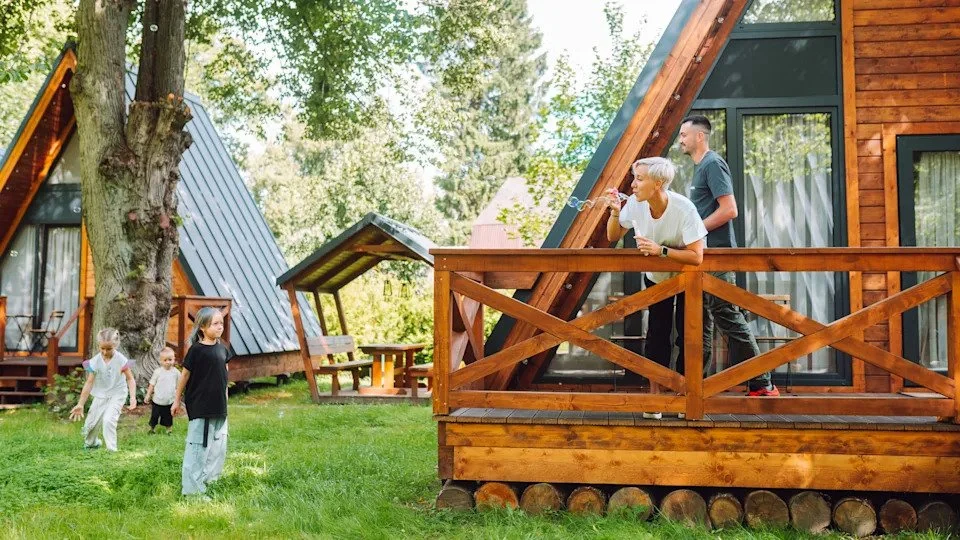
Airbnbs can be especially cost-effective for large families who might normally need multiple hotel rooms.
(Olga Rolenko via Getty Images)
The proliferation of platforms like Airbnb, Vrbo, Booking.com and more has made it incredibly easy for families to rent everything from a lakefront home to an apartment in a city and everything in between. And one of the biggest advantages of these options, compared to hotels, is the ability to avoid eating every meal out while on vacation.
"Accommodations with kitchens allow families to prepare occasional meals themselves, helping to reduce dining costs," says Seguin. "They also typically provide more space, which can help larger families avoid booking multiple hotel rooms and create a more comfortable experience overall."
As for exactly how much you stand to save, it really depends on the style of rental you select, the season, the location and more. (Some reports put the average nightly home rental cost in the United States at around $298.)
House sitting and house swapping

If you're open to sharing your home, you can save big on accommodations.
(Halfpoint Images via Getty Images)
Renting a home for your next family vacation is one option. Swapping homes (and cutting your vacation costs even further) is another. Platforms like HomeExchange and Kindred were created to make this possible.
HomeExchange, for example, lists 550,000 homes across 155 countries. That includes homes with swimming pools, homes by the ocean, kid-friendly homes and more. An annual membership is $235, but after that, you can swap homes with other members worldwide as much as you want over 12 months with no additional costs.
Kindred, also a membership community, lists more than 300,000 homes across Europe and North America, in popular destinations like London, Paris, New York, Los Angeles and Miami. Also worth noting: Kindred accepts swaps with both homeowners and renters.
"When home exchanging, there's no money exchanged between travelers — only hospitality. By opening your home to others, you unlock travel opportunities across the world," says Jessica Poillucci, a public relations manager at HomeExchange. "This can, of course, help families save thousands on accommodation costs, but it can also offer a lot of comfort and convenience, as families can easily find homes with amenities suited to their needs."
Staying in real, lived-in homes means access to fully equipped kitchens, laundry and potentially even extras like pools and trampolines, keeping kids entertained without added cost.
Camping

Whether you're staying in a classic tent or a cabin with amenities, camping is still one of the most affordable ways to travel.
(OR Images via Getty Images)
"Camping is one of the most underrated ways for families to have a genuinely great vacation without the price tag of a resort or hotel," says Martyn Slack, creator of the YouTube channel Three Tickets Anywhere. "Camping strips the vacation back to what kids actually remember: being outside, exploring, having freedom."
Campground fees are typically minimal. Nightly rates vary based on the type of campground you select, its amenities and the season, and prices can differ between public and private campgrounds. Even with fluctuations, the typical nightly rate for this type of vacation — between $15 and $50 — is still very budget-friendly.
"The key money-saving thing most people miss is the electric hookup. Once you're plugged in at a modern campsite, you have everything you need to cook proper meals for the whole family," Slack adds. "No expensive restaurant trips, no buying disposable BBQ equipment, no relying on overpriced campsite cafés. You're essentially running a mobile kitchen. Over a weeklong trip, that alone can save a family hundreds compared with eating out even once a day."